1835
Grimm's Deutsche Mythologie
Jacob Grimm publishes his great collection of German belief, with the stories of Berchta, Holda and the Wild Hunt that later writers tie to the twelve nights.
Village belief → Scholarship → Source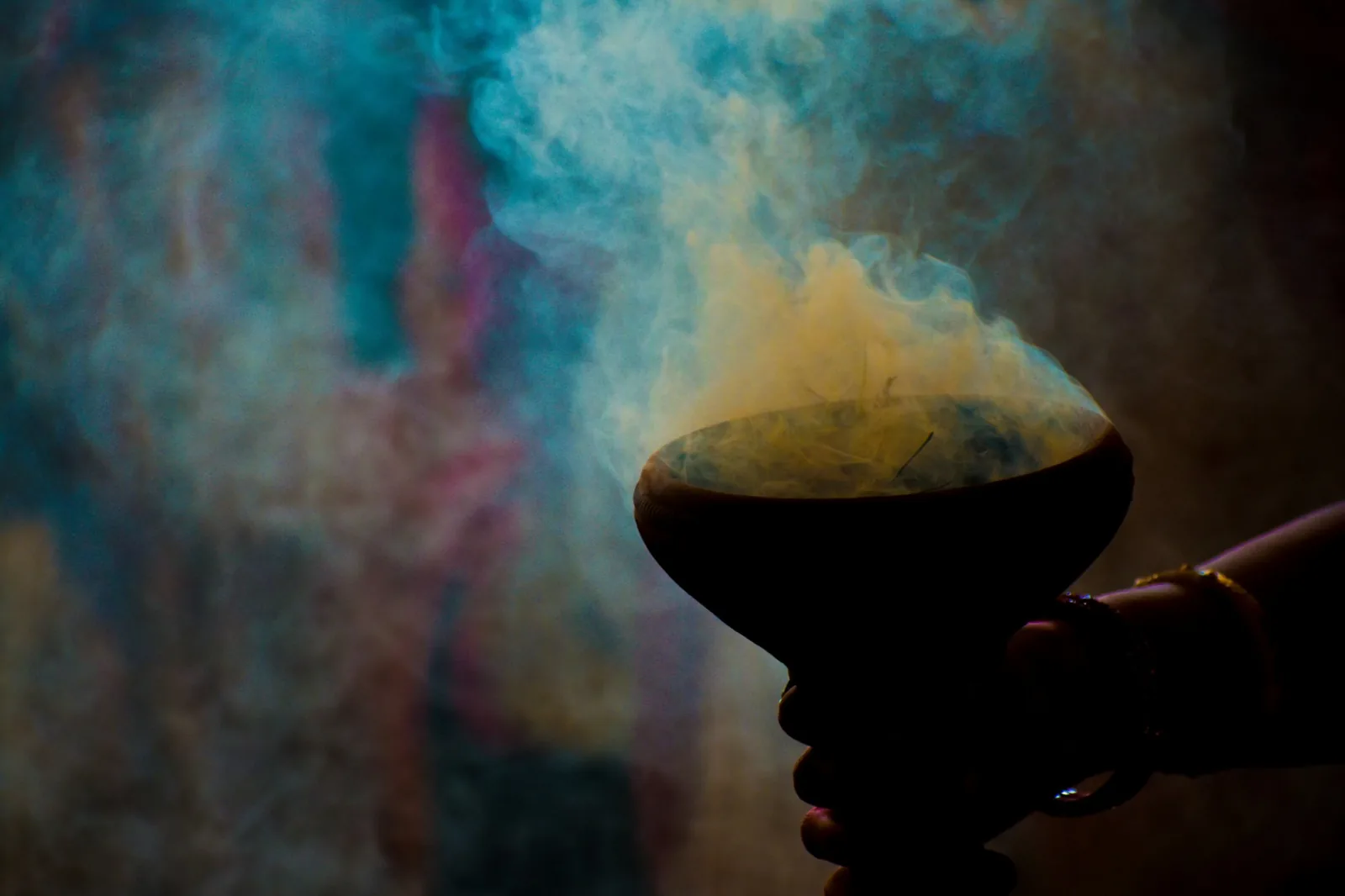
Between Christmas and Epiphany, German and Austrian households kept twelve nights apart. Houses were blessed with smoke, the Percht was left milk and bread, and people tried to learn something about the year ahead. Today many read each night as one month of the new year and write down what they dream.
The Rauhnächte are the twelve nights between Christmas and Epiphany on 6 January, kept in Germany and Austria as a time set apart from ordinary days. In the belief most often told today, each night stands for one month of the coming year, and a dream in that night says something about that month.
At a glance
How to read this
This page describes what people in Germany and Austria did and believed in these nights, drawn from the folklorists and the records it cites. The Rauhnächte are a living custom, and the Perchten runs and the blessing of houses are still kept in parts of the Alps. Much of what is said about the nights today, including the exact reading of one dream for one month, comes from recent books rather than from the old records, and we say so where it matters. There is no evidence that a dream in any of these nights foretells what happens in the matching month.
The twelve nights between Christmas and Epiphany go by several names in German. They are the Rauhnächte or Raunächte, the Zwölften (the twelves), and the Losnächte, the nights of lots. Which night counts first differs from region to region. In Tyrol, according to the folk custom database of the University of Innsbruck, the twelve nights ran from 24 December to 6 January, and in older custom they began on St Thomas's Day, 21 December. The time was marked by special devotion, and many kinds of work were set aside.
Where the name comes from is not settled. One explanation ties it to Rauch, smoke, because houses and stables were blessed with smoke in these nights. Another goes back to the Middle High German rûch, hairy, for the shaggy figures believed to roam in the dark. A third view is often repeated, that the twelve nights are the days left over between a lunar year of 354 days and the solar year. It is an attractive idea, but it is an idea, and nobody has shown that the custom grew out of it.
The best-known rite of the Rauhnächte is the Räuchern. In Tyrol a pan of embers and blessed herbs was carried through the house while the family prayed, and a second person followed and sprinkled every room with holy water. The Innsbruck database notes that this was once common across much of Tyrol and is now kept mainly in remote valleys, and that in Matrei in East Tyrol some houses are still blessed this way at Christmas, New Year and Epiphany.
The nights also belonged to the Percht, a figure of Alpine legend believed to creep through the countryside in the dark, and people set milk and bread outside the door for her. On the eve of Epiphany came the Perchten processions, which still run in parts of Austria and Bavaria. In the nineteenth century Jacob Grimm gathered the stories of Berchta and of Holda, her northern counterpart, who were said to go about in the twelve nights and to check that the spinning had been finished. Grimm also wrote down the stories of the Wild Hunt, the host of the dead that rode through the winter sky.
Because the nights fell between the old year and the new, people tried to learn something about the future in them. In the Tyrolean Unterland it was believed that in the twelve Rauhnächte one could find out about marriage or wealth in the year ahead, and lots were cast for the answer. The same counting was applied to the weather. An old farmer's rule read the weather of each of the twelve days as the weather of the matching month, the first day for January and the last for December.
The form most people know today joins these two ideas. Each of the twelve nights stands for one month of the coming year, and what you dream in a night tells you something about its month. Many keep a notebook by the bed and write down one dream each morning, so that by Epiphany they hold twelve dreams for the twelve months. We could not trace this exact reading in the old records the way we could trace the lots and the weather rule. It is told in nearly every book on the Rauhnächte written in the last few decades, and that is where most people meet it.
"In the Tyrolean Unterland it was believed that in the twelve Rauhnächte one could learn something about the future."
Feste und Bräuche database, University of Innsbruck (translated from the German)For much of the twentieth century the Rauhnächte survived as village custom, mostly in the Alps. In recent decades they have come back across the German-speaking world in a new form. Bookshops fill with guides in December, and the nights are kept as a pause between the years, with incense, quiet evenings and questions about the year ahead. Most of this revival is personal rather than religious, and some of it is plainly new.
The dream practice is a large part of why the custom fits modern life so easily. It asks for nothing more than attention. Sleep research would describe it differently from the old belief. The continuity hypothesis holds that dreams draw on what occupies us while awake, and the turn of the year is when most people think about what they want and what they fear. A dream written down on 28 December may well show those hopes and fears. That is a reason to read it with care, but it is not evidence that the dream knows what March will bring, and the research on prophetic dreams finds no sign that any dream does.
Embers and blessed herbs carried through the house with prayer, every room sprinkled with holy water.
A figure of Alpine legend abroad in the dark. Milk and bread were left at the door for her.
The nights of lots, when people asked about marriage and wealth in the year ahead.
One dream for each night, read as one month of the new year. The form most people keep today.
Jacob Grimm publishes his great collection of German belief, with the stories of Berchta, Holda and the Wild Hunt that later writers tie to the twelve nights.
Village belief → Scholarship → SourceThe ethnologist Ingeborg Weber-Kellermann publishes Das Weihnachtsfest, a cultural and social history of the whole Christmas season, the time in which the Rauhnächte fall.
Custom → Social history → ContextThe University of Innsbruck gathers Tyrolean feasts and customs into a public database, with the Rauhnächte, the Räuchern and the Perchten among them.
Fieldwork → Archive → Open to allAcross Germany and Austria people keep the Rauhnächte as a pause between the years, and many write down one dream for each night.
Old custom → New form → Still aliveDid you know nobody is sure where the name Rauhnächte comes from? One explanation points to Rauch, the smoke used to bless houses, and another to the old word rûch, hairy, for the shaggy figures of the night.
Did you know the Percht was left milk and bread? In Tyrol people believed she crept through the countryside in these nights, and food was set outside the door for her.
Did you know a Norwegian ballad tells of a man who slept through the Christmas nights? In Draumkvedet, first written down in Telemark in the 1840s, Olav Åsteson falls asleep on Christmas Eve and wakes only on the thirteenth day of Christmas. Then he rides to church and tells at the door what he saw in his dream.
Did you know the twelve nights were once counted from 21 December? In older Tyrolean custom they began on St Thomas's Day, not at Christmas.
The Rauhnächte are the twelve nights between Christmas and Epiphany on 6 January, kept in Germany and Austria as a time set apart from ordinary days. In the belief most often told today, each night stands for one month of the coming year, and a dream in that night says something about that month. Older customs include blessing the house with smoke and leaving milk and bread for the Percht.
It differs by region. In Tyrol the twelve nights ran from 24 December to 6 January, and in older custom they began on St Thomas's Day, 21 December. Many modern guides count from the night of 24 to 25 December or 25 to 26 December and end on the night before Epiphany.
In the belief most told today, each of the twelve nights stands for one month of the new year, so a dream in the first night speaks of January and a dream in the last night of December. People write down one dream each morning. The older records describe lot-casting about marriage and wealth and the same counting for the weather. There is no evidence that these dreams foretell the months.
The origin of the name is not settled. One explanation ties it to Rauch, smoke, because houses and stables were blessed with smoke in these nights. Another derives it from the Middle High German rûch, hairy, for the shaggy figures believed to roam in the dark.
A database of Tyrolean feasts and customs built by the university's historians and ethnologists, with the Räuchern, the Percht and the lot-casting of the twelve nights.
View in Sources ↗The founding collection of German folk belief, with Berchta, Holda and the Wild Hunt, the figures later tied to the twelve nights.
View in Sources ↗A German ethnologist's cultural and social history of the whole Christmas season, the time in which the Rauhnächte fall.
View in Sources ↗St Andrew's Eve, Christmas Eve and St Agnes
Odin, the runes and the dreams of the north
The mora and the spirits of the night
Why the turn of the year shows up in dreams
What the evidence says about dreams and the future
When a dream comes back across the year
Kept together, they begin to show a thread. The Dream Journal letter arrives on the 1st and the 15th: one symbol read closely, one honest idea from the science of sleep.
Free · Twice a month max · One-click unsubscribe
And if you want to keep the dreams themselves: the Companion plan keeps what you cannot see alone.
In the Rauhnächte people write down a dream each morning and wonder what it says about the year. This reading will not tell you what January holds. It reads the dream with you, and what it shows about your hopes for the year is yours to keep.
Read Your DreamNo account needed · Room for the whole dream · Private by design