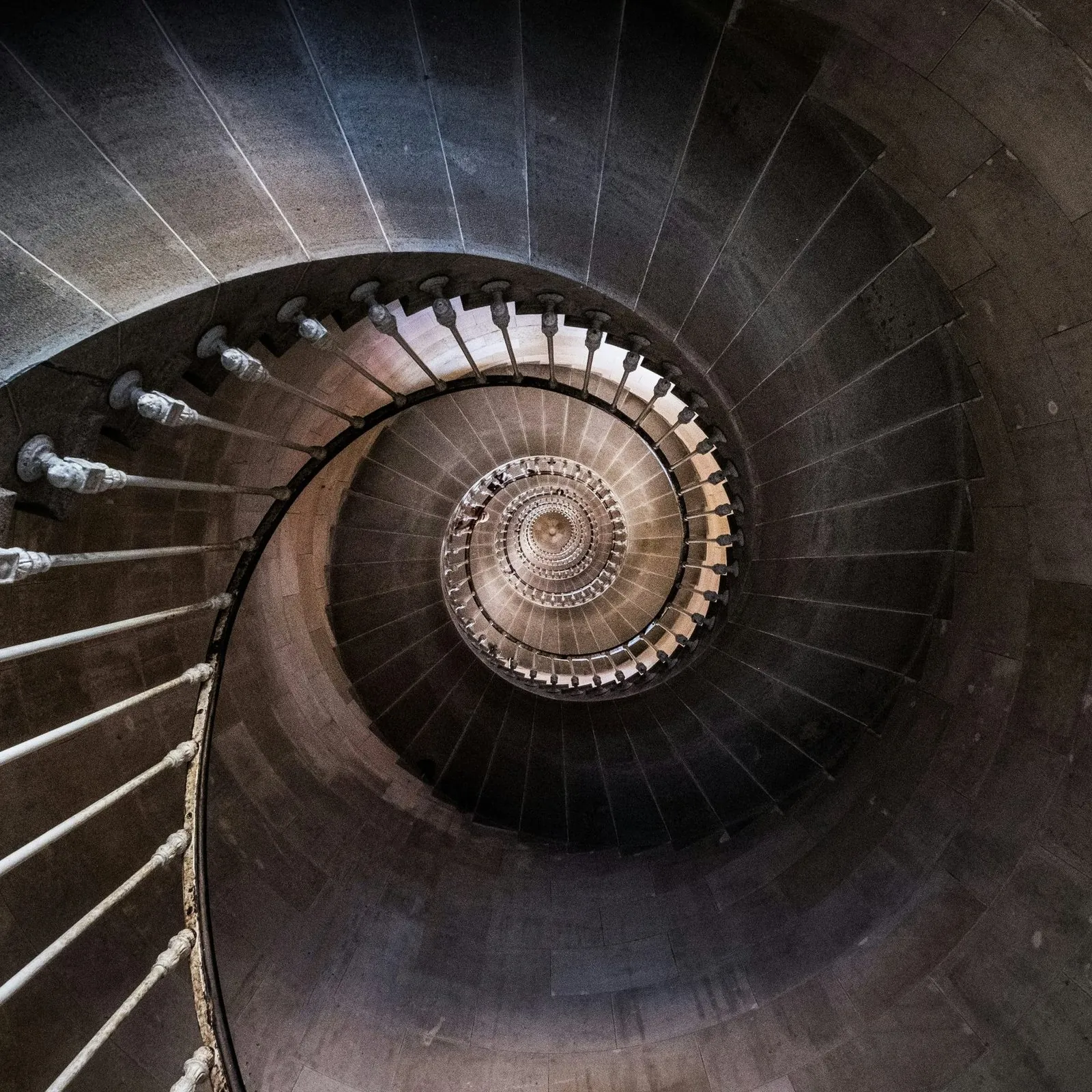
Recurring Dreams, Why the Same Dream Keeps Returning
The same corridor. The same locked door. The same rising water. Recurring dreams are the psyche's most persistent communication, a message so important that your unconscious will repeat it night after night, month after month, year after year, until you finally hear what it's saying.
A recurring dream usually points to an unresolved psychological pattern your mind has not yet worked through. It keeps returning because the emotion behind it is too strong or too deeply buried for a single night of REM processing to settle.
At a glance
- The dream repeats because the issue it represents has not been resolved, and it tends to stop once the message is received.
- The most common ones, teeth falling out, being chased, exam unprepared and falling, appear across all cultures and connect to fundamental human anxieties.
- Practical ways to resolve one: journal the pattern, try active imagination, use Image Rehearsal Therapy, and address the waking situation it mirrors.
Where the science stands
Recurring dreams are real and common, and research such as Image Rehearsal Therapy (Krakow, 2001) links them to unresolved stress and strong emotion. There is no fixed dictionary meaning that fits everyone; your own associations with the corridor, the locked door or the rising water come first. If a recurring dream keeps distressing you or follows a trauma, it can be worth talking to a professional.
The Psyche's Broken Record
A recurring dream is not a malfunction, it is an unresolved psychological pattern demanding attention. Jung would say it represents a complex: an emotionally charged cluster of associations that has not been integrated into conscious awareness. The dream repeats because the issue it represents has not been resolved.
Matthew Walker's research shows that REM sleep processes emotional memories in the absence of the stress chemical noradrenaline, effectively providing "overnight therapy." When a dream recurs, it suggests this processing is incomplete: the emotional charge is too strong, too complex, or too deeply buried for a single night's processing to resolve.
The most common recurring dreams, being chased, teeth falling out, being unprepared for an exam, flying, falling, being naked in public, appear across all cultures. Their universality suggests they are connected to fundamental human anxieties that transcend individual experience.
The Most Common Recurring Dreams: Decoded
Teeth Falling Out
Anxiety about appearance, competence, communication, or aging. The most universally reported recurring dream, documented since 1275 BCE.
Being Chased
Running from a part of yourself you refuse to face. The pursuer is almost always your shadow, the disowned quality that grows stronger the more you flee.
Exam Unprepared
Feeling tested by life and found wanting. Most common among high achievers, the hidden fear that competence is a mask.
Falling
Loss of control, failure anxiety, or the ego losing its elevated position. Sometimes, a necessary surrender.
How to Resolve a Recurring Dream
The evidence-based approaches converge on a single principle: engage consciously with what the dream is presenting, rather than passively enduring the repetition.
Journal the Pattern
Write the dream in detail every time it occurs. Note what varies and what stays constant, the constants are the core message.
Active Imagination (Jung)
While awake, re-enter the dream in your mind. Continue the narrative. Ask the threatening figure what it wants. Change your response.
Image Rehearsal Therapy
Clinically proven for nightmares (Krakow, 2001): while awake, visualize the recurring dream but change the ending to something empowering. Rehearse the new version before sleep.
Address the Waking Parallel
Identify what unresolved situation in your life mirrors the dream's theme. Take one concrete step toward resolution. The dream often stops when the waking issue is addressed.
Research consistently shows that recurring dreams diminish or cease when the dreamer engages with their content rather than dismissing or enduring them. The psyche stops repeating the message once it has been received.
Facts That Will Surprise You
Did you know the most common recurring dream, teeth falling out, has been recorded for over 3,200 years? The Egyptian Dream Book (c. 1275 BCE) documented this dream. It appears in every culture studied.
Did you know recurring dreams usually stop when you engage with their message? Research shows that active techniques, journaling, image rehearsal, addressing the waking parallel, resolve recurring dreams more effectively than simply waiting them out.
Did you know high achievers are most likely to have the "unprepared for exam" dream? The people who have "passed" every test in life are the ones haunted by the fear of being exposed as inadequate. Jung called this the shadow of success.
Does the same dream keep finding you?
A dream that returns is worth writing down, if only to see what changes between visits. If it distresses you, talk to someone. If you want to look at it first, you can bring it here.
Read Your DreamFree · No account needed · Your dream is not stored
Go Deeper
Quantitative dream analysis from a database of 50,000+ dreams.
View in Sources ↗Dreams evolved to simulate ancestral threats. Why nightmares feel so real.
View in Sources ↗Explore More Phenomena
One dream is a night.
Kept together, they begin to show a thread. The Dream Journal letter arrives on the 1st and the 15th: one symbol read closely, one honest idea from the science of sleep.
Free · Twice a month max · One-click unsubscribe
And if you want to keep the dreams themselves: the Companion plan keeps what you cannot see alone.