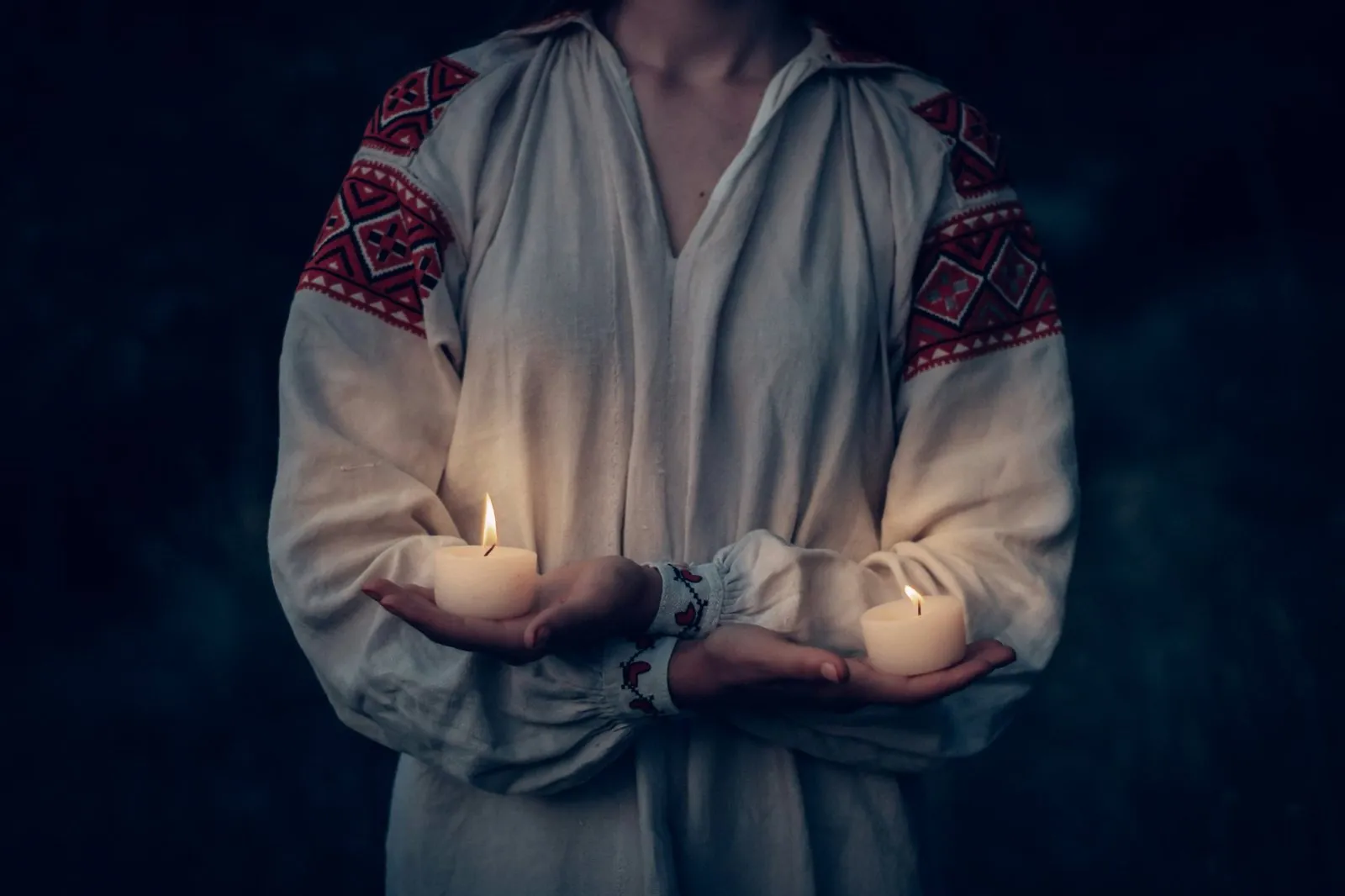
Slavic Dreams: Mora, Domovoj & the Birth of "Nightmare"
The Slavic Mora, a demon who sits on your chest during sleep, carries the same ancient name as the mare in "nightmare". The Domovoj, a household spirit, communicates through dreams. And pre-Christian Slavs practiced dream divination at solstices.
Slavic folk tradition treated dreams as a channel where spirits reached the living. The Mora, a demon believed to sit on a sleeper's chest and stop them from moving, carries the same ancient name as the mare in English "nightmare", German Nachtmahr, Dutch nachtmerrie and Polish zmora.
At a glance
- The Mora sits on a sleeper's chest, and her name shares a root with "nightmare" in English, German, Dutch and Polish.
- The Domovoj, a household guardian spirit, spoke to families through dreams: a warm touch meant good fortune, a cold one meant trouble.
- Pre-Christian Slavs practiced dream divination, gadání na sny, at the solstices and equinoxes.
How to read this
This is a living folk tradition carried across many Slavic countries, and the mare in the English word "nightmare" is the Mora's cousin, from the same ancient root rather than from the Slavic word itself. Read the Mora as a folkloric way of describing what we now call sleep paralysis, the state where the body stays in REM muscle atonia while the mind partly wakes. It is a respectful account of what people believed, not a claim about how dreams actually work.
Mora: One Entity, Dozens of Languages
The Mora (also Mara, Můra, Mura) carries one of the oldest names in the dream language of Europe. This Proto-Slavic demon, who sits on sleepers' chests, suffocates them, and causes terrifying dreams, shares that name with a whole family of words for the same experience:
Czech: můra. English: nightmare (Old English mære). German: Nachtmahr. French: cauchemar. Dutch: nachtmerrie. Scandinavian: mara. Polish: zmora. One ancient word, from Prague to Paris to London, all describing the same terrifying experience: something pressing on your chest while you cannot move.
Modern neuroscience has identified this as sleep paralysis, a state where the body remains in REM atonia (muscle paralysis) while consciousness partially awakens. The experience is universal; the Mora is the Slavic explanation. Japan calls it kanashibari. The phenomenon is global, the Slavs simply gave it its most enduring name.
"Můra, mare, Mahr, cauchemar, one ancient word surviving in language after language, all naming the same weight on the chest."
On the linguistic reach of the Mora's nameDomovoj: The Dream-Speaking Guardian of the Home
The Domovoj is a household spirit in Slavic tradition, a small, bearded protector who lives behind the stove or under the threshold. He communicates with the family primarily through dreams: appearing to warn of danger, predict harvests, or express displeasure if the household is disorderly.
A Domovoj sitting on your chest (but gently) and being warm means good fortune. If his touch is cold, trouble is coming. This mirrors the Mora experience, chest pressure during sleep, but inverted: the Domovoj is benevolent where the Mora is malicious. Same sensation, opposite meaning, context determines interpretation, just as Artemidorus taught in ancient Greece.
Mora / Mara
Nightmare demon who sits on sleepers' chests. Gave the word "nightmare" to English, German, French, and dozens more languages.
Domovoj
Household guardian spirit who communicates through dreams. Warm touch = good fortune. Cold touch = warning.
Gadání na sny
Pre-Christian dream divination at solstices and equinoxes. Connecting dream interpretation to cosmic cycles.
Runes of Lány
The oldest writing found on Slavic territory, a bone inscribed with the last seven runes of the Elder Futhark (c. 600 CE). Evidence of Norse-Slavic dream culture exchange.
Facts That Will Surprise You
Did you know the word "nightmare" has cousins in language after language? Czech můra, English nightmare, German Nachtmahr, French cauchemar, all name the same demon sitting on your chest during sleep, and all go back to one ancient root.
Did you know Slavic households had a dream-speaking guardian spirit? The Domovoj, a small bearded protector behind the stove, communicated with families through dreams. Warm touch = fortune. Cold touch = danger. Dream interpretation as home security.
Did you know pre-Christian Slavs practiced dream divination at solstices? Gadání na sny connected dream interpretation to the turning points of the solar year, the longest and shortest nights were the most powerful for dreaming.
Did you know the oldest writing found on Slavic territory is runic? A bone from Lány near Břeclav bears the last seven runes of the Elder Futhark (c. 600 CE), evidence of cultural exchange between Norse and Slavic dream traditions.
Slavic Dreams: Questions People Ask
Where does the word nightmare come from?
The mare in nightmare comes from Old English mære, a spirit believed to sit on a sleeper's chest. The Slavic Mora is its cousin rather than its source. Both go back to one ancient root, which also gave Czech můra, Polish zmora, German Nachtmahr and Dutch nachtmerrie, all naming the same feeling of pressure during sleep.
What is the Mora in Slavic folklore?
The Mora, also called Mara or Mura, is a demon that presses on sleepers, suffocates them and brings terrifying dreams. Modern neuroscience describes the same experience as sleep paralysis, when the body stays in REM muscle atonia while the mind partly wakes.
What is the Domovoj?
The Domovoj is a Slavic household spirit, a small bearded protector who lives behind the stove. He reaches the family through dreams to warn of danger or predict harvests. A warm touch signals good fortune, a cold touch warns of trouble.
Did pre-Christian Slavs interpret dreams?
Yes. They practiced gadani na sny, ritual dream divination performed at solstices and equinoxes. The longest and shortest nights of the year were held to be the most powerful for dreaming.
Go Deeper
The beliefs and then the stories people told about them, with a chapter of its own on the domovoi and the other spirits of house and farmstead.
View in Sources ↗Over 150 beings set out one by one by a Slovenian folklorist, the mora among them. Written from inside the Slavic material rather than about it from a distance.
View in Sources ↗Explore Connected Traditions
One dream is a night.
Kept together, they begin to show a thread. The Dream Journal letter arrives on the 1st and the 15th: one symbol read closely, one honest idea from the science of sleep.
Free · Twice a month max · One-click unsubscribe
And if you want to keep the dreams themselves: the Companion plan keeps what you cannot see alone.
Did something press on your chest in the night?
The mora of Slavic stories is what science calls sleep paralysis, a known and harmless thing that feels anything but. If it happens to you often or frightens you, talk to someone. A dream of your own can be read here.
Read Your DreamNo account needed · Room for the whole dream · Private by design