Mythological
Odin on Yggdrasil
Nine nights of voluntary death-trance. No food, no water, pierced by his own spear. In this state between worlds, the runes were revealed, knowledge born from the deepest possible dream.
Sacrifice → Revelation → Runes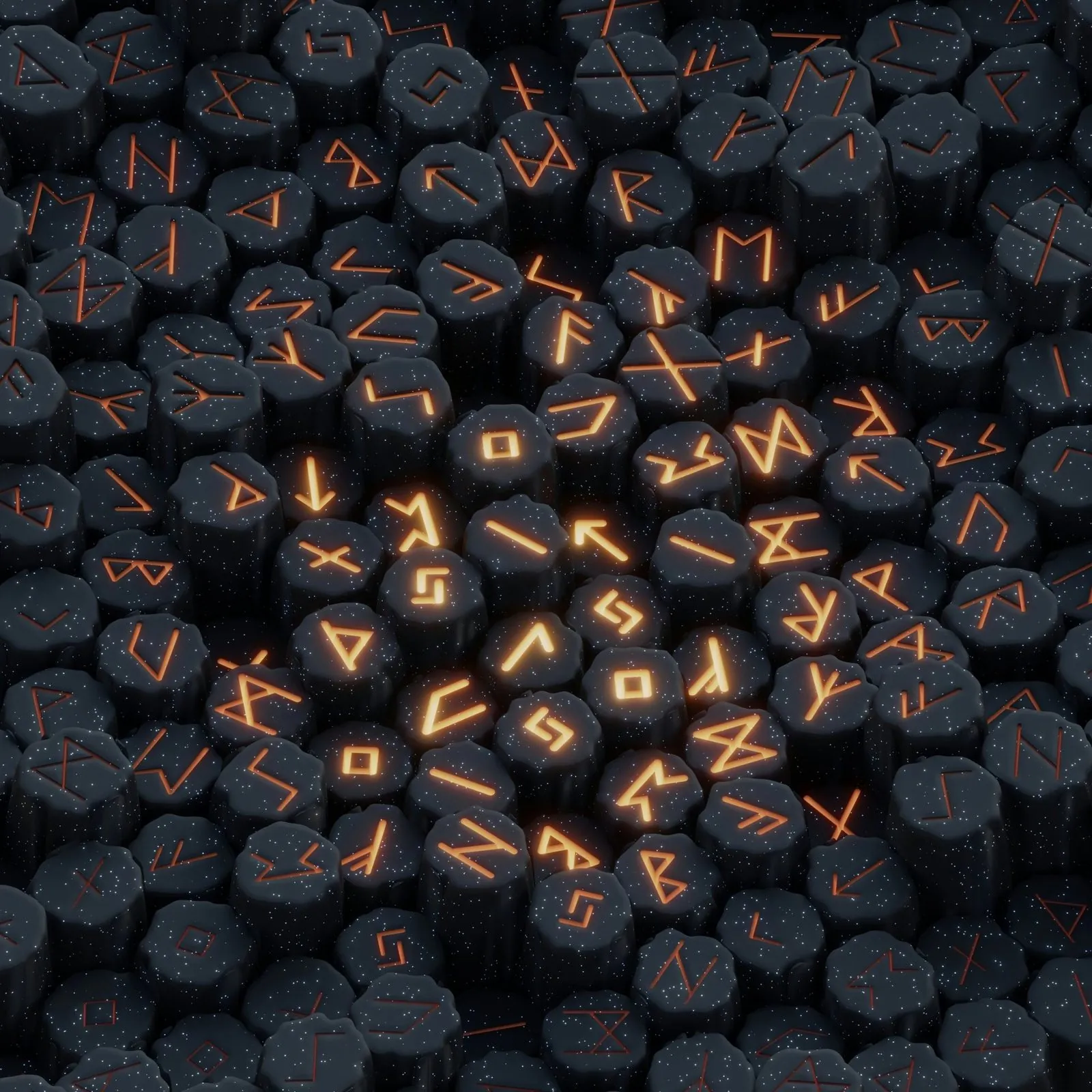
Odin hung nine nights on the World Tree in a death-trance to gain the runes. Baldr's prophetic dream triggered the chain of events ending the world. And Viking women, völvas and alrunas, were the most respected dream interpreters in Norse society.
Norse tradition treated dreams as prophecy that carried real weight: they warned of deaths, foretold events, and revealed wisdom won through trance and sacrifice. Odin gained the runes in a nine-night death-trance, and in the sagas dreams like Baldr's routinely came true.
At a glance
How to read this
Old Norse religion is a historical belief system, though a small modern revival known as Heathenry exists today. The sagas and Eddas were written down centuries after the events they describe, largely by Christian-era scribes such as Snorri Sturluson, so we read them as an account of a worldview rather than proof that dreams foretell fate. Where a story shades into legend, like Baldr's death dream setting off Ragnarök, we treat it as the myth it is.
Odin hung for nine nights on Yggdrasil, the World Tree connecting all nine worlds, pierced by his own spear, without food or water, in a state between life and death. In this extreme death-trance, on the edge of consciousness, the runes were revealed to him.
This is not merely a myth about writing, it is a cosmological statement about the origin of knowledge itself. Wisdom comes from the depths: from suffering, from altered states, from the boundary between worlds. The runes were not invented; they were received in a vision. As described in the Hávamál (Poetic Edda): "He peered down, took up the runes, screaming he fell back."
The parallel with shamanic traditions worldwide is striking, the same pattern of voluntary death-trance leading to revelation appears in Native American vision quests and Aboriginal Dreamtime.
"He peered down, took up the runes, screaming he fell back."
Hávamál (Rúnatál), Poetic EddaBaldr, the most beautiful of the gods, began dreaming of his own death. His mother Frigg responded by making every substance in the world swear not to harm him, but she forgot mistletoe.
The trickster Loki fashioned a dart from mistletoe and guided blind Höðr's hand to throw it. Baldr died. The chain of events that followed led directly to Ragnarök, the destruction and rebirth of the entire cosmos. The only prophetic dream in any mythology that triggered an apocalypse.
The Völuspá (Prophecy of the Seeress), the most important text in Norse mythology, is itself structured as a dream-vision. The völva sees the creation, destruction, and rebirth of the world in a single prophetic trance.
Every person in Norse tradition had a fylgja, a guardian spirit in animal form that appeared in dreams. If you saw another person's fylgja, that person would soon die. This concept is identical to the Mayan wayob, two continents, one archetype.
Seiðr, a form of Norse shamanic magic involving trance states close to dreaming, was predominantly practiced by women. The völvas (seeresses) and alrunas (female rune-masters) were the most respected dream interpreters in Viking society. Frigg and Freyja were their divine patrons.
Gained runes through nine-night death-trance. Father of gods, seeker of wisdom through suffering and altered states.
His death-dream triggered Ragnarök. The most beautiful god, undone by a vision that came true despite every precaution.
Seeresses who practiced seiðr, dream-trance magic. The Völuspá itself is a völva's cosmic dream-vision.
Animal guardian spirit living in dreams. Seeing another's fylgja meant their death. Identical to Mayan wayob.
Nine nights of voluntary death-trance. No food, no water, pierced by his own spear. In this state between worlds, the runes were revealed, knowledge born from the deepest possible dream.
Sacrifice → Revelation → RunesBaldr dreamed of his own death. Despite every precaution, the dream came true, triggering Ragnarök. The only prophetic dream that ended a world.
Prophecy → Tragedy → ApocalypseGudrun dreamed of a dead hawk, foretelling the murder of her husband Sigurd. In Norse literature, women's dreams are consistently more accurate than men's.
Warning → Fulfilled → SagaMedieval Norwegian poem describing a vision of the afterlife, comparable to Dante's Divine Comedy and the Tibetan Bardo Thödol. Three traditions, three continents, one motif: dream as journey through death.
Vision → Afterlife → Universal motifDid you know runes were revealed in a dream-trance? Odin hung nine nights on the World Tree, pierced by his own spear, in a voluntary death-state, and in that trance between worlds, the runes appeared. Wisdom born from the deepest possible dream.
Did you know the only prophetic dream that triggered an apocalypse is Norse? Baldr began dreaming of his own death. His mother tried to protect him. She failed. His death triggered Ragnarök, the end and rebirth of the world.
Did you know Vikings believed every person had a dream-spirit in animal form? The fylgja was your guardian spirit living in dreams. The Maya had an identical concept called wayob on the other side of the world. Two continents, one dream archetype.
Did you know Viking women were considered the best dream interpreters? Völvas and alrunas, seeresses and female rune-masters, practiced seiðr (dream-trance magic) and were highly respected. In the sagas, women's dreams are consistently more accurate than men's.
Odin hung nine nights on Yggdrasil, the World Tree, pierced by his own spear and without food or water. In that trance between life and death the runes were revealed to him, as told in the Hávamál of the Poetic Edda.
Baldr dreamed of his own death. His mother Frigg made every substance swear not to harm him but forgot the mistletoe, which Loki turned into the dart that killed him. His death set off the chain of events leading to Ragnarök.
A fylgja was a personal guardian spirit that appeared in dreams, usually in animal form. Seeing another person's fylgja was read as a sign that they would soon die.
Women held that role. Völvas (seeresses) and alrunas (female rune-masters) practiced seiðr, a trance magic close to dreaming, and were the most respected dream interpreters. In the sagas, women's dreams such as Gudrun's hawk dream in the Völsunga Saga are shown as reliably accurate.
The book that set the standard on seiðr, on who the völur were and on how their graves read. It compares Norse practice with Sámi carefully rather than loosely.
View in Sources ↗The Hávamál, where Odin hangs nine nights, in a translation that keeps the rhythm rather than flattening it.
View in Sources ↗Kept together, they begin to show a thread. The Dream Journal letter arrives on the 1st and the 15th: one symbol read closely, one honest idea from the science of sleep.
Free · Twice a month max · One-click unsubscribe
And if you want to keep the dreams themselves: the Companion plan keeps what you cannot see alone.
The Norse called a following spirit fylgja and often met it in dreams. Whether yours was that or something of your own is not for a reading to settle. It can help you look at the animal and the dream around it.
Read Your DreamNo account needed · Room for the whole dream · Private by design