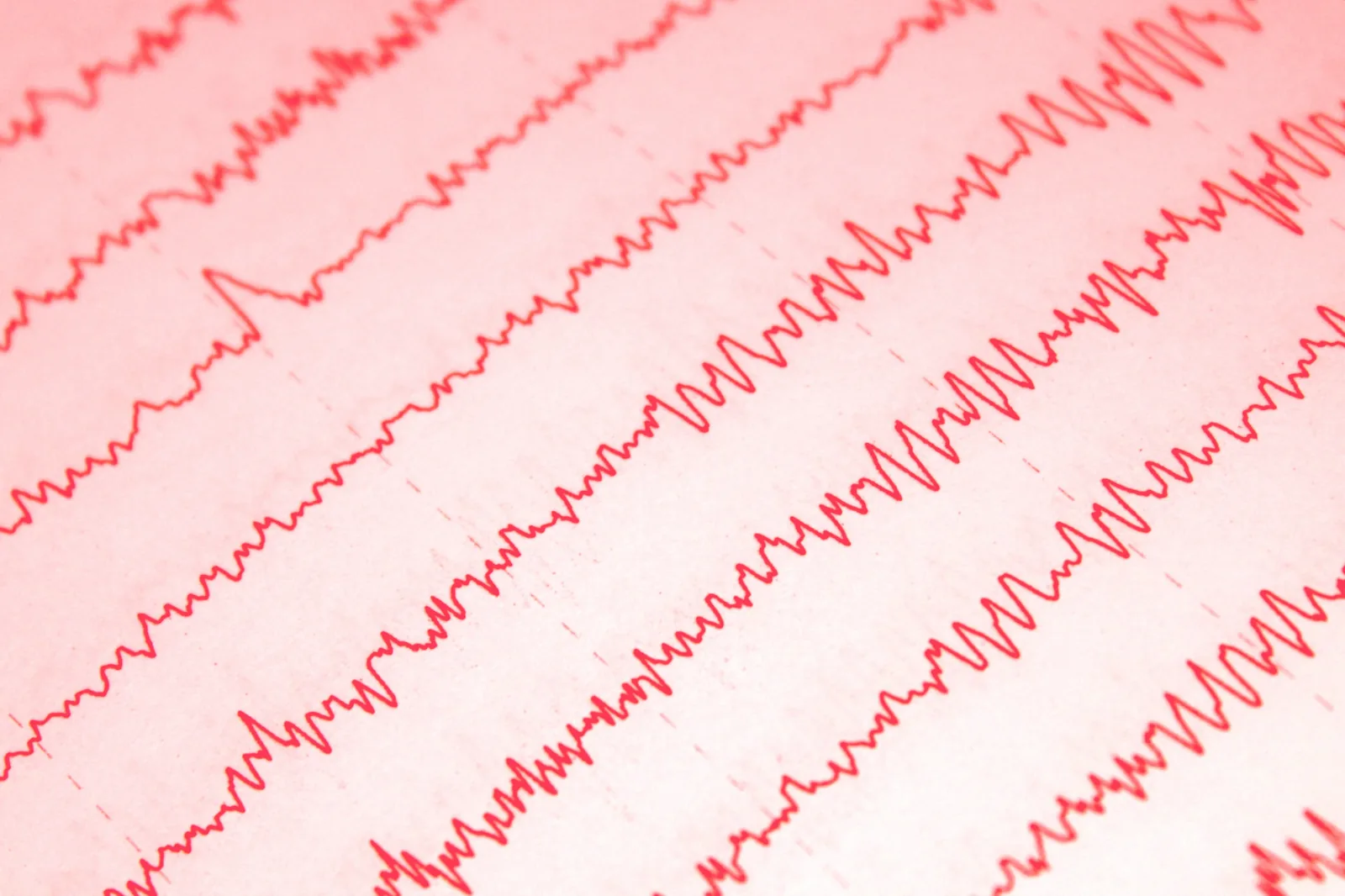
The Dream Scientists
For most of history, dreams belonged to priests and philosophers. In 1953 they became something a laboratory could measure. These are the people who did the measuring: what each of them established, what they argued about, and the question none of them has answered.
Modern dream science began in 1953, when Eugene Aserinsky and Nathaniel Kleitman discovered REM sleep at the University of Chicago. The thirteen researchers profiled here established that dreaming can be measured and that its content is patterned, while why we dream still has no scientific consensus.
At a glance
- Laboratory dream science began with the discovery of REM sleep in 1953; before that, dream study was interpretation, not measurement.
- What is established: dreams can be studied in the lab, their content is patterned and tracks waking life, and lucid dreaming is real and verifiable.
- What is not: why we dream. Emotion regulation, threat rehearsal, problem-solving, and no function at all are still live, competing proposals.
Where the science stands
The established core of dream science is reproducible: REM sleep exists, waking people from it yields dream reports far more often than waking them from other stages, sleep runs in roughly 90-minute cycles, lucid dreaming is real and lab-verifiable, and large collections of dream reports show stable, mostly mundane content patterns that track waking life.
Everything about function is still open. Emotional regulation, threat simulation, problem incubation, memory processing, and no function at all each have evidence and serious defenders, and none is proven. A hypothesis is a proposal, not a fact. Even the equation of dreaming with REM sleep has come apart under lesion evidence, and dreams are reported from non-REM sleep too.
This field also corrects itself, which is a reason to trust it. Dement abandoned his early claim that dream deprivation harms the mind when it failed to replicate, Hobson revised his own model twice, and Walker has acknowledged and partly corrected errors in his popular book. Where this page says established, the finding has survived that process. Where it says open, it has not yet.
Who built the science of dreams
Dream science as a laboratory discipline is barely seventy years old. It began in 1953, when a graduate student named Eugene Aserinsky and his supervisor Nathaniel Kleitman found rapid eye movement sleep at the University of Chicago. The field was then built by a small group over the decades since: William Dement, Calvin Hall, Allan Hobson, Rosalind Cartwright, Ernest Hartmann, Stephen LaBerge, Deirdre Barrett, Antti Revonsuo, G. William Domhoff, Michael Schredl, and Matthew Walker.
It helps to be clear about what this science has and has not done. It can identify sleep stages on an EEG, count what appears in thousands of dream reports, and verify that a dreamer is conscious inside a dream. It cannot tell you why you dream, or what your dream about a snake means. Why we dream and what dreams mean has no scientific consensus, and the researchers on this page would be the first to say so.
The profiles below run in rough chronological order. For each: who they were, what they showed, and what their work left open.
The discovery years: Aserinsky, Kleitman, and Dement
Eugene Aserinsky was a graduate student in Nathaniel Kleitman's Chicago lab when he made the observation the whole field rests on: sleeping subjects showed periodic bursts of rapid eye movements with wake-like brain activity, and when woken during these bursts, they usually reported dreams. The finding ran to barely two pages in Science in September 1953. Aserinsky left sleep research for long stretches and received little credit during his lifetime. He died in 1998 when his car struck a tree, and the cause of the crash was never determined.
Nathaniel Kleitman is usually called the father of modern sleep research. He wrote the field's foundational monograph, Sleep and Wakefulness (1939), ran the lab where REM was found, and experimented on himself without hesitation, once spending a month underground in Mammoth Cave to test the human sleep cycle. He lived to 104, long enough to watch the field he started fill journals and clinics.
William C. Dement turned the discovery into a discipline. With Kleitman in 1957 he tied REM periods to dream recall and described the roughly 90-minute sleep cycle. His 1960 dream deprivation study in Science established the REM rebound effect, and he went on to found the first sleep disorders clinic at Stanford in 1970 and teach sleep to some 20,000 undergraduates. He is credited with coining the term REM sleep. One honest footnote: his early claim that losing dreams damages the mind did not hold up in later studies, and Dement himself dropped it.
Counting dreams, and arguing about the brain: Hall, Hobson, Cartwright, Hartmann
Calvin S. Hall made dreams countable. The coding system he published with Robert Van de Castle in The Content Analysis of Dreams (1966) is still in use, and the roughly 50,000 dream reports he collected showed that dream content is patterned, mostly mundane, and continuous with everyday concerns rather than exotic. His data cut against fixed symbol dictionaries rather than for them: dreams have statistical regularities, but a pattern is not a meaning.
J. Allan Hobson, with Robert McCarley, proposed the activation-synthesis hypothesis in the American Journal of Psychiatry in 1977: dreams as the forebrain's story, assembled from bursts of brainstem activity during REM sleep. It was a direct challenge to Freud, and it did not stand still; Hobson revised his own account into the AIM model and, in 2009, a theory of protoconsciousness. The original model is contested: Mark Solms's lesion studies (2000) showed that dreaming and REM sleep can come apart, patients can lose one and keep the other, so a theory built on REM physiology alone cannot be the whole story.
Rosalind Cartwright studied what dreams do for people in trouble. Her longitudinal studies at Rush University followed people through divorce and depression, and found that those who dreamed about the ex-spouse, and worked the feeling through in the dream, recovered from depression more often. Colleagues called her the Queen of Dreams; her last book was The Twenty-four Hour Mind (2010). Her samples were modest, so the finding stands as good evidence for a hypothesis, that dreaming helps regulate emotion, not as a settled function.
Ernest Hartmann spent 49 years at Tufts and most of them on nightmares. His thin and thick boundaries concept, a measurable personality dimension, predicts who has vivid dream lives and frequent nightmares, and it holds up in questionnaire studies. He was also the founding editor of the journal Dreaming. His broader theory, that dreams connect new experience into memory guided by emotion, remains a proposal rather than consensus.
Proof, evolution, and the uses of dreaming: LaBerge, Revonsuo, Barrett
Stephen LaBerge brought lucid dreaming into the laboratory: trained dreamers moved their eyes in prearranged patterns from within polysomnographically verified REM sleep, published in Perceptual and Motor Skills in 1981 after Science and Nature declined the paper. Credit is shared. Keith Hearne and dreamer Alan Worsley ran the same eye-signal demonstration first, in April 1975 at Hull University, but the result stayed in a thesis, and it was LaBerge's independent verification and publication that built the field. That lucid dreaming is real is now established and has been replicated many times, including two-way communication experiments in 2021; what it is good for remains open.
Antti Revonsuo, a Finnish philosopher and neuroscientist, published the threat simulation theory in Behavioral and Brain Sciences in 2000: dreaming evolved to simulate threats so we could rehearse detecting and escaping them, which would explain why dream content skews negative. Tests of it disagree. Malcolm-Smith and Solms (2004) found fewer threats and fewer successful escapes in ordinary dream samples than the theory predicts, while Valli and Revonsuo (2009) read the evidence, especially from trauma-exposed children, as supportive. It stands as a serious, testable, unsettled proposal.
Deirdre Barrett, a psychologist at Harvard Medical School, tests dream incubation experimentally. In her studies, students who chose a problem and primed it before sleep often dreamed about it within a week, and a fair share judged the dream helpful; The Committee of Sleep (2001) collects the research and the case histories. She edits the journal Dreaming and is a past president of the International Association for the Study of Dreams. The open question is whether problem-solving is something dreams are for, or something we can occasionally harvest from them.
The data era: Domhoff, Schredl, Walker
G. William Domhoff carried Hall's counting tradition into the era of brain imaging. With his student Adam Schneider he put Hall's inherited dream collections online as DreamBank.net, now more than 20,000 searchable reports, and in The Neurocognitive Theory of Dreaming (2022) he argued that dreaming is intensified mind-wandering by the brain's default network, drawing on waking concerns, and that it may have no adaptive function at all. He is the strongest serious voice for the possibility that dreams are for nothing, and that question is not settled.
Michael Schredl, head of research at the sleep laboratory of the Central Institute of Mental Health in Mannheim, is among the most prolific empirical dream researchers working, with more than 500 papers since 1990, with more than 500 papers since 1990. His studies ground the continuity hypothesis: what you do and care about awake shows up in your dreams roughly in proportion, with emotional involvement counting for more than raw hours. Continuity describes what dreams contain. It does not say what dreams are for, a distinction Schredl himself keeps sharp.
Matthew Walker, at UC Berkeley, proposed with Els van der Helm that REM sleep works as a kind of overnight therapy, taking the emotional sting out of memories while keeping their content (Psychological Bulletin, 2009). His book Why We Sleep (2017) made sleep science a mass-market topic. It also contains documented overstatements, some of which he later corrected, so the careful place to meet his work is the peer-reviewed paper. The overnight-therapy account is supported by experiments but not settled: some of its key findings have mixed replications.
What nobody knows yet
Why we dream has no scientific consensus. Emotional regulation (Cartwright, Walker), threat rehearsal (Revonsuo), problem incubation (Barrett), memory processing, and no function at all (Domhoff) are all live proposals, each with serious researchers behind it, and none is proven.
It is not even settled that dreaming and REM sleep are the same phenomenon. Solms's lesion work and reports of dreams from non-REM sleep show they can come apart, which unsettles any theory built on REM physiology alone.
And on the question most readers arrive with, what a particular dream means, the science is quiet. Hall's fifty thousand reports show that dream content is patterned and tracks waking life, but there is no empirical support for fixed symbol dictionaries. The researchers above would hand the question back to you, which is roughly what we do too: a dream's meaning starts with the dreamer's own associations, not a lookup table.
Frequently Asked Questions
Who discovered REM sleep?
Eugene Aserinsky and Nathaniel Kleitman discovered REM sleep at the University of Chicago and published it in Science on September 4, 1953. Aserinsky, then a graduate student in Kleitman's lab, noticed that sleepers showed periodic bursts of rapid eye movements, and that people woken during these bursts usually reported dreams.
Who proved lucid dreaming is real?
Two researchers did, independently. Keith Hearne, working with dreamer Alan Worsley at Hull University, recorded the first prearranged eye signals from within REM sleep in April 1975, but the result stayed in a thesis. Stephen LaBerge repeated the demonstration at Stanford and published it in a peer-reviewed journal in 1981, which established lucid dreaming as a lab-verifiable fact.
What is the threat simulation theory of dreams?
It is Antti Revonsuo's proposal, published in Behavioral and Brain Sciences in 2000, that dreaming evolved to simulate threatening events so we could rehearse spotting and avoiding danger. It would explain why dream content skews negative, but tests of it disagree: some dream samples show fewer threats and fewer successful escapes than the theory predicts, so it remains an open hypothesis.
Do scientists know why we dream?
No. Emotional regulation, threat rehearsal, problem incubation, memory processing, and no function at all are all live proposals, each backed by serious researchers, and none is proven. What is established is narrower: dreaming can be studied in the lab, its content is patterned and tracks waking life, and dream reports can be collected and counted.
Go Deeper
The 1966 coding system still used to count what dreams actually contain, and the data that showed dream content is patterned and mostly everyday.
View in Sources ↗The activation-synthesis account argued in full, the book that moved dream theory from the couch into neuroscience.
View in Sources ↗Dream incubation and problem-solving, with the experiments and case histories behind the claim.
View in Sources ↗The quantitative tradition carried forward, and the case that dreams reflect waking concerns, whatever else they do or do not do.
View in Sources ↗One dream is a night.
Kept together, they begin to show a thread. The Dream Journal letter arrives on the 1st and the 15th: one symbol read closely, one honest idea from the science of sleep.
Free · Twice a month max · One-click unsubscribe
And if you want to keep the dreams themselves: the Companion plan keeps what you cannot see alone.