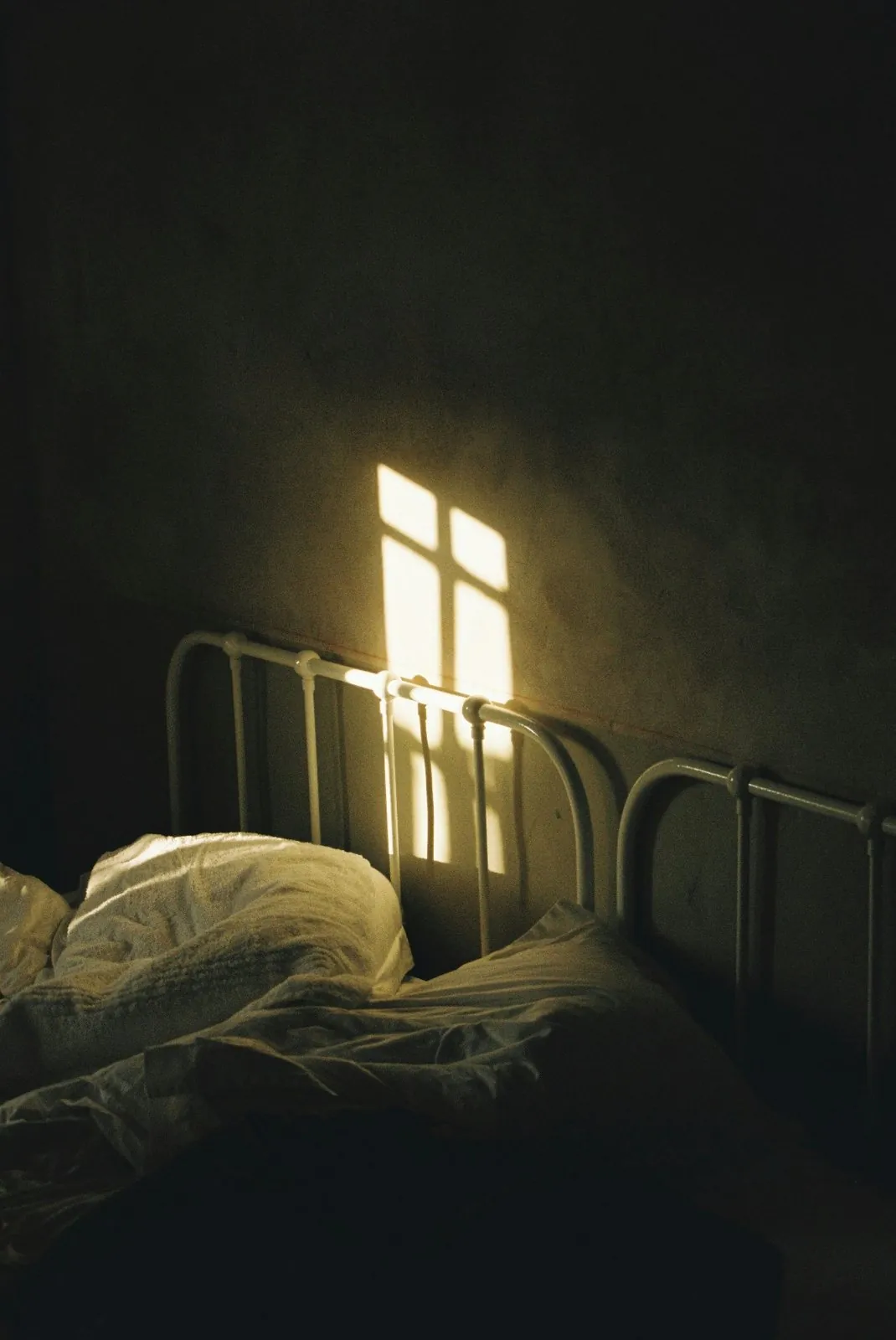
Dark bedroom with light casting through a window onto an empty bed
◐ Dream Phenomena · Global · Neuroscience

Sleep Paralysis – The Demon on Your Chest

You wake up. You cannot move. Something is in the room – a shadow, a weight on your chest, a presence you cannot see but absolutely feel. This experience has terrified humans for millennia, and every culture on Earth has given it a name. The Slavic Mora. The Japanese Kanashibari. The Newfoundland Old Hag. One phenomenon, a hundred demons.

The experience

What Sleep Paralysis Actually Is

During REM sleep, your brain paralyzes your voluntary muscles – a safety mechanism called REM atonia that prevents you from acting out your dreams. Sleep paralysis occurs when this paralysis persists into wakefulness: you are conscious, but your body remains locked in sleep mode.

The experience typically lasts seconds to minutes and is often accompanied by hypnagogic hallucinations: a sense of presence in the room, pressure on the chest, difficulty breathing, shadowy figures, and overwhelming dread. The hallucinations are generated by a brain caught between dreaming and waking – producing dream imagery while the conscious mind watches, terrified and unable to move.

An estimated 8% of the population experiences sleep paralysis at least once. It is more common during periods of sleep deprivation, irregular sleep schedules, and high stress – exactly the conditions that disrupt the normal transitions between sleep stages.
Global demonology

One Phenomenon, a Hundred Demons

The Origin of "Nightmare"

The praslovanské *mora became Czech "můra," English "nightmare" (Old English mære), German "Nachtmahr," French "cauchemar." One being, dozens of languages – all describing a female demon who sits on the sleeper's chest and suffocates.

"Bound in Metal"

Literally "bound in metal" – a spirit that paralyzes the body. The term is so embedded in Japanese culture that it is used colloquially for any feeling of being frozen or stuck.

The Ghost That Sits

A spirit that sits on the sleeper's chest, causing suffocation. Part of the vast Thai spirit world (phi) that communicates through dreams.

The Spirit That Can Kill

Between 1977–1988, over 117 apparently healthy Hmong men died in their sleep after resettlement in the US. Researchers linked it to the extreme stress of the dab tsog belief combined with trauma – the nocebo effect at its most lethal. Wes Craven read about these deaths and created Freddy Krueger.

The pattern

Why Every Culture Sees the Same Demon

The extraordinary consistency of sleep paralysis reports across cultures – a shadowy figure, chest pressure, paralysis, terror – is explained by the shared neurology underlying the experience. The brain generates the same hallucinations regardless of whether the sufferer is in Tokyo, Prague, or Lagos. But the cultural interpretation shapes how terrifying the experience becomes.

Shelley Adler's research (2011) demonstrated that the cultural framework surrounding sleep paralysis can amplify or diminish its psychological impact. When a culture teaches that the chest-sitting demon can kill you – as in the Hmong dab tsog tradition – the physiological stress response can become genuinely dangerous.

– Adler, S. "Sleep Paralysis: Night-mares, Nocebos, and the Mind-Body Connection" (2011)
What helps

Managing Sleep Paralysis

Understanding the mechanism is itself therapeutic. Knowing that sleep paralysis is a neurological glitch, not a supernatural attack, dramatically reduces the terror. Practical strategies include maintaining regular sleep schedules, reducing sleep deprivation, sleeping on your side (supine position increases episodes), and managing stress.

During an episode: focus on moving one small muscle (a toe, a finger), practice calm breathing, and remind yourself that it will pass within seconds to minutes. Some people find that "leaning into" the experience – treating it as a doorway to lucid dreaming rather than fighting it – transforms the terror into curiosity.

Did you know…

Facts That Will Surprise You

Did you know the word "nightmare" literally means "night demon"? The English word comes from the Slavic Mora / Old English mære – a spirit that sits on your chest while you sleep. The same being appears in Czech, German, French, and dozens of other languages.

Did you know Freddy Krueger was inspired by real deaths during sleep? Between 1977–1988, over 117 healthy Hmong refugees died in their sleep. Wes Craven read about these cases in the LA Times and created A Nightmare on Elm Street.

Did you know 8% of people experience sleep paralysis at least once? The experience – paralysis, chest pressure, shadowy figures – is identical across cultures. Only the demon's name changes.

Recommended reading

Go Deeper

Threat Simulation TheoryAntti Revonsuo (2000)

Dreams evolved to simulate ancestral threats. Why nightmares feel so real.

View in Sources ↗
Dictionary of SymbolsChevalier & Gheerbrant (1969)

Encyclopedic reference spanning Egyptian, Greek, Celtic, Hindu, Buddhist, Islamic, and Christian symbolism.

View in Sources ↗
Why We SleepMatthew Walker (2017)

UC Berkeley's definitive work on REM sleep, emotional processing, and why we dream.

View in Sources ↗
Related phenomena

Explore More Phenomena

What visited you last night?

Sleep paralysis often carries a message from the unconscious. Understanding your dreams is the first step.

☽ Interpret Your Dream – Free

No account needed · No character limit · Private by design

Last updated: · Maintained by the Somniary editorial team · Sources & References